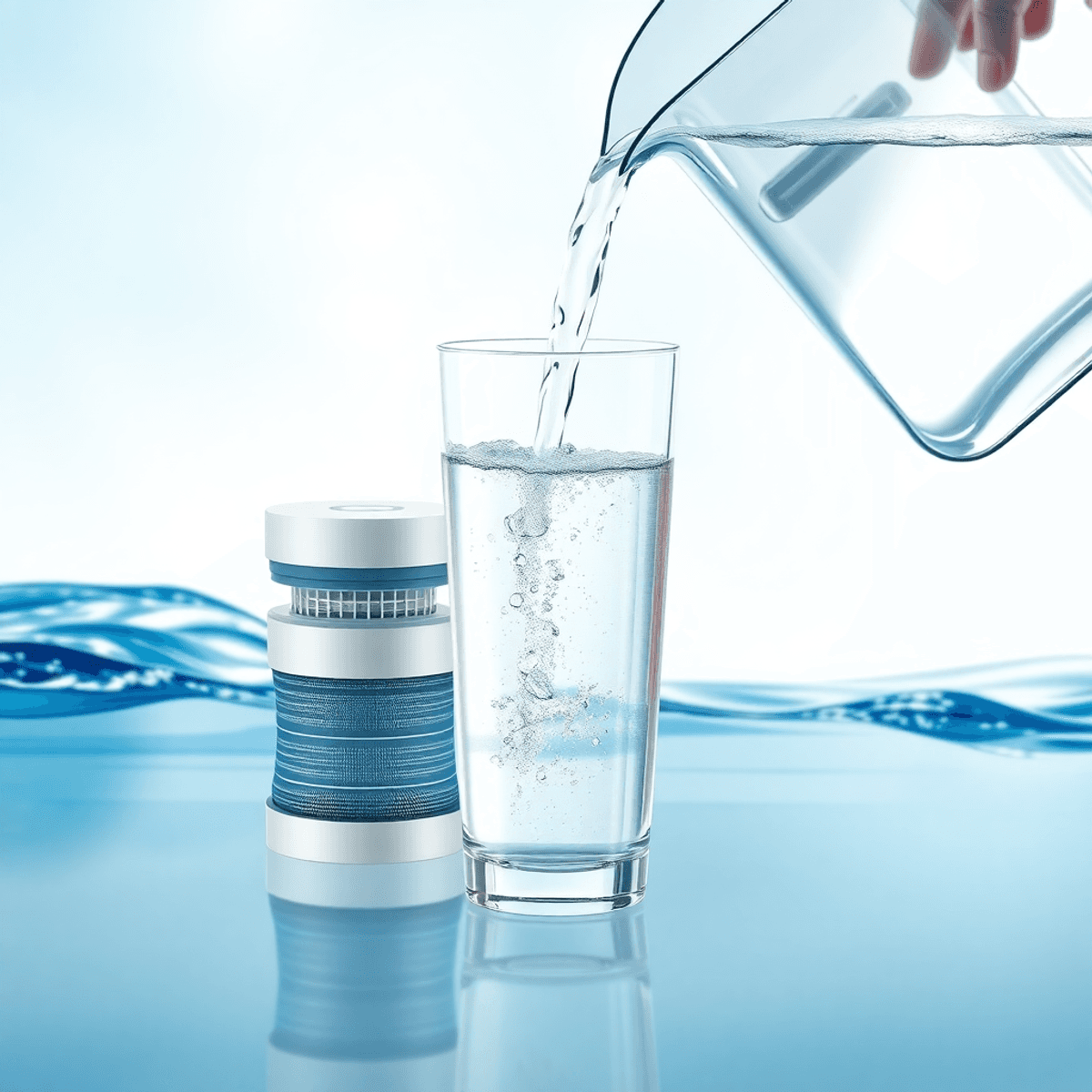
ZeroWater has earned a strong reputation in the water filtration industry for delivering products that provide exceptionally clean and great-tasting drinking water. Known for its innovative ZeroWater 5-stage advanced filtration system, the brand stands out by addressing contaminants that many standard filters miss. Whether you are using a zerowater water filter pitcher, a zero water water bottle, or other ZeroWater filtration solutions, the focus remains on purity and safety.
Access to clean drinking water is essential for health. Tap water often contains various contaminants such as heavy metals, chlorine taste, fluoride, nitrates, and even emerging "forever chemicals" like PFOA and PFOS. These substances can affect both taste and safety. Many common filters only target a limited range of impurities, leaving behind dissolved solids that impact water quality.
This blog explores the ZeroWater 5-stage advanced filtration technology in detail. You will learn how each filtration stage works to remove sediments, dissolved solids, chlorine odors, heavy metals, and microscopic particles from your tap water. The article also covers the benefits of using a zero filter, explains how to monitor filter effectiveness with included tools like the TDS meter, and compares ZeroWater products with other filtration options available in 2026.
However, it's important to remember that while ZeroWater's advanced filtration system is a significant step towards healthier hydration, it's not the only solution available. For instance, water pump systems can also play a crucial role in ensuring access to clean water. These systems can be particularly useful in areas where municipal water supply is unreliable or contaminated.
In such cases, a stormwater pump may be necessary to manage excess rainwater and prevent flooding. Similarly, if you're dealing with a water tank, understanding how to effectively use a water pump can significantly improve your water management strategy.
Lastly, if you're interested in exploring other aspects of water management beyond filtration, our article on the secrets of water compressors might provide valuable insights. This information helps you make an informed decision about upgrading to ZeroWater’s comprehensive filtration system for healthier hydration while also considering other essential aspects of water management.
Understanding Water Contaminants and Filtration Needs
Total Dissolved Solids (TDS) measure the combined content of all inorganic and organic substances dissolved in water. These solids include minerals, salts, metals, cations, and anions. TDS levels directly impact the taste, odor, and safety of your drinking water. High TDS often indicates the presence of contaminants that may be harmful to health or affect water quality. Monitoring TDS helps you understand how effectively your filtration system is working.
You will encounter various water contaminants in tap water, many of which standard filters fail to remove adequately:
- Heavy Metals: Lead, mercury, chromium, and aluminum pose significant health risks even at low concentrations. Lead reduction is crucial due to its neurotoxic effects.
- Chlorine Taste and Odor: Municipal water treatment commonly uses chlorine to disinfect water. While effective against microbes, chlorine often leaves an unpleasant taste and smell.
- Fluoride: Added in some local water supplies for dental health benefits. Excessive fluoride intake can lead to fluorosis or other health concerns.
- Nitrates: Commonly found in agricultural runoff, nitrates can cause serious conditions such as methemoglobinemia ("blue baby syndrome") if consumed in high amounts.
- Forever Chemicals (PFOA/PFOS): Persistent environmental pollutants linked to cancer and immune system issues. These compounds resist degradation and accumulate over time.
The presence of these contaminants makes relying on basic activated carbon filters insufficient if you aim for truly clean drinking water. This is why advanced filtration solutions like the ZeroWater 5-stage filtration pitcher are necessary. They combine multiple technologies designed specifically for:
- Reducing total dissolved solids by up to 99.6%, far surpassing typical filters
- Removing a broad spectrum of contaminants including heavy metals and "forever chemicals"
- Eliminating chlorine taste and odors for better drinking experience
- Providing consistent lead reduction certified by NSF standards
Using a ZeroWater filter replacement regularly ensures your zero water filtration pitcher maintains peak performance against these challenging impurities. The included TDS meter measures real-time water purity so you know exactly when it’s time to change your filter.
However, achieving efficient water movement within your home is equally important in this process. A reliable water pump can facilitate this need by ensuring a steady supply of clean water from your filtration system.
Regular water pump maintenance is essential for optimal performance and longevity of the system. Moreover, if you're dealing with groundwater sources, mastering the use of a groundwater pump can significantly improve your water supply efficiency.
Choosing a filtration system that addresses all these factors guarantees safer, better-tasting water free from harmful substances that can affect your health and enjoyment of drinking water every day.
Understanding ZeroWater’s 5-Stage Advanced Filtration System
Stage 1: Coarse Filter for Sediment Removal
The ZeroWater 5 stage filtration system begins with an important first step: the coarse filter stage. This stage is designed to capture large particles and sediments commonly found in tap water, such as sand, rust flakes, and other visible debris that can affect water clarity and taste.
Key functions of this stage:
- Acts as a primary barrier to trap sediments.
- Prevents larger particles from reaching and clogging the finer filtration stages.
- Extends the lifespan of the subsequent filter components by reducing particulate load early on.
- Enhances overall filtration efficiency by preparing water for more detailed purification.
With a zero water filter pitcher, you can be confident that this coarse filter is doing its job effectively—removing bulky contaminants right from the start of the purification process.
This initial sediment removal is crucial because it protects the delicate media involved in later stages, such as activated carbon and ion exchange resins. Without effective sediment removal at this stage, those advanced materials could become clogged or less efficient quickly.
When you use a zero filter pitcher, you benefit from this engineered barrier that removes sediments right away, making every sip cleaner and clearer. This coarse filter stage reflects ZeroWater’s commitment to tackling contaminants at multiple levels, beginning with the basics—sediment removal—before addressing dissolved solids and chemical impurities.
The coarse filter stage stands apart from typical single-stage filters by its targeted role in managing physical impurities upfront. This design choice is part of why ZeroWater’s system achieves superior contaminant reduction compared to many other pitchers relying solely on activated carbon.
Sediment removal at this stage means less wear on your zero water filter pitcher, supporting longer-lasting, reliable purification without sacrificing flow speed or water taste quality.
Stage 2: Distributor Maximizing Contact Time
The ZeroWater 5 stage filtration system includes a critical second step known as the distributor stage. This stage is designed to optimize the flow of water through the filter media, ensuring maximum contact time between water and the filtering components.
Unlike many standard filters or pitchers on the market, which may rely on simple gravity flow or basic carbon blocks, ZeroWater’s distributor stage strategically spreads the water evenly across the entire surface area of the filter media. This process increases the efficiency of contaminant removal by allowing more thorough interaction between water and filter materials.
Key functions of the distributor stage:
- Maximizes exposure: Water moves slowly and uniformly over the layers below, preventing channeling or fast-flow paths that reduce filtration effectiveness.
- Enhances performance: Prolonged contact improves removal rates of dissolved solids, heavy metals, chlorine taste, and other contaminants.
- Supports downstream stages: By evenly distributing water, it protects subsequent filtration elements such as activated carbon and ion exchange resins from premature clogging or uneven wear.
ZeroWater’s unique five-stage filtration technology sets it apart from typical single or dual-stage filters found in many zero water filter pitchers. The inclusion of this distributor stage plays a vital role in delivering NSF-certified performance. NSF certification verifies that the filter meets stringent standards for contaminant reduction, including lead and other harmful substances. This certification provides confidence in the zero filter replacement products you choose for your home.
When using a ZeroWater pitcher, this distributor mechanism works hand-in-hand with the preceding coarse filter stage responsible for sediment removal. Together they prepare tap water by removing large particles early while ensuring that finer contaminants are efficiently targeted downstream.
This design innovation within ZeroWater’s system guarantees a level of purification that standard pitchers cannot match, making it a smart choice if you prioritize high-quality drinking water free from dissolved solids and unwanted tastes or odors.
Stage 3: Activated Carbon/Oxidation Reduction Alloy Stage
The third stage in the ZeroWater 5 stage filtration system plays a critical role in enhancing water's taste and odor profile. This step utilizes a combination of activated carbon and an oxidation reduction alloy, a technology far more advanced than the simple carbon filters found in many other pitchers.
How it works:
- Activated Carbon: Known for its porous structure, activated carbon traps chlorine molecules effectively. Chlorine is commonly added to municipal water supplies for disinfection but often leaves behind a strong chemical taste and smell that can be unpleasant.
- Oxidation Reduction Alloy: This specialized alloy complements the activated carbon by chemically transforming contaminants that contribute to bad odors and tastes. It reduces oxidizing agents such as chlorine and chloramine, neutralizing them before they reach your glass.
This stage’s design ensures that your water not only meets safety standards but also tastes fresh and clean without the metallic or chemical aftertaste common in tap water.
Why this matters:
Many standard water filters or pitchers rely solely on basic activated carbon to reduce chlorine taste. The ZeroWater 5 stage filtration system’s inclusion of oxidation reduction alloy sets it apart by targeting a broader range of compounds responsible for unpleasant odors and flavors. This means your zero water filter pitcher delivers noticeably better-tasting water.
NSF Certification:
The filtration media used at this stage is NSF-certified, which guarantees that it meets rigorous standards for contaminant reduction, specifically lead and chlorine taste removal. Certification provides peace of mind that the zero filter replacement you invest in maintains consistent performance throughout its lifespan.
By efficiently eliminating chlorine taste and odors at this point in the process, this stage protects downstream filtering components from premature fouling, preserving their effectiveness for sediment removal, ion exchange, and fine particle filtration found in subsequent stages of the zero filter pitcher system.
Stage 4: Ion Exchange for Dissolved Solids Removal
The ZeroWater 5 stage filtration system incorporates an advanced ion exchange stage that plays a critical role in removing dissolved solids from your tap water. This stage specifically targets contaminants that standard filters often miss, such as heavy metals and nitrates. The technology works by exchanging harmful ions like lead, mercury, and nitrates with harmless ions, effectively reducing these toxic substances to near undetectable levels.
Key features of the ion exchange stage:
- Heavy metals removal: Lead and mercury are common pollutants found in tap water due to aging pipes and industrial runoff. The ion exchange resin binds to these metals, trapping them inside the filter and preventing them from passing into your drinking water.
- Nitrates reduction: Nitrates arise mainly from agricultural fertilizers and can pose serious health risks, especially for infants. This filtration step reduces nitrate concentrations significantly, making water safer for all family members.
- Enhancing total dissolved solids (TDS) reduction: While earlier stages focus on sediment removal and chlorine taste elimination, the ion exchange stage directly lowers TDS by removing dissolved inorganic compounds responsible for water hardness and unpleasant taste.
ZeroWater's unique 5-stage filtration technology stands apart from typical zero filter pitchers or standard activated carbon filters. Many filters only address chlorine or sediment but fall short when it comes to dissolved solids removal. The ion exchange process ensures that your water is purified beyond basic sediment removal provided by the coarse filter stage or flavor improvement by the activated carbon/oxidation alloy.
This advanced filtration method is NSF-certified, which guarantees that the zero filter pitcher meets strict standards for contaminant reduction. NSF certification assures you that the heavy metals and nitrates are reduced to levels deemed safe by regulatory bodies—an assurance not commonly found in many other home filtration products.
When combined with the previous stages—such as sediment removal in the coarse filter stage—the ion exchange step elevates ZeroWater’s performance well above ordinary zero filter replacements or pitchers available on the market today. It provides a comprehensive solution addressing multiple contaminant categories within a single filter system.
The ion exchange technology embedded within ZeroWater’s 5 stage filtration system offers you peace of mind knowing that your filtered water is free from many harmful dissolved solids, improving both safety and taste without relying solely on chemical additives or standard carbon filtering alone.
Stage 5: Non-Woven Membrane for Fine Particle Removal
The ZeroWater 5 stage filtration system concludes with a non-woven membrane filter that performs the crucial task of fine particle removal. This stage acts as the final polishing step, capturing microscopic particles that have eluded earlier filtration phases. The result is water that is not only free from visible sediments but also remarkably clear and pure on a microscopic level.
This non-woven membrane differentiates the ZeroWater filter pitcher from many standard filters or pitchers available on the market. While typical filters rely heavily on activated carbon or basic sediment removal, ZeroWater’s inclusion of this advanced membrane ensures an extra layer of precision and effectiveness in purification.
Key benefits of the non-woven membrane in the ZeroWater 5 stage filtration include:
- Microscopic particle capture: Removes particles too small to be caught by the coarse filter stage or ion exchange process.
- Enhanced water clarity: Delivers crystal-clear water by eliminating ultra-fine sediments and residual contaminants.
- Improved taste and safety: By removing these tiny impurities, it contributes to better tasting water and increased health safety.
This stage supports NSF certification standards that guarantee the filter’s effectiveness in reducing a broad spectrum of contaminants. The certification reflects rigorous testing, confirming that each ZeroWater filter pitcher consistently meets high-performance benchmarks for contaminant reduction.
The ZeroWater 5 stage filtration technology, combining sediment removal through a coarse filter stage and fine particle elimination via a non-woven membrane filter, represents a comprehensive approach to water purification. It ensures your filtered water exceeds basic clean water expectations, setting it apart from simpler zero filter pitchers or other zero filter replacement options that may lack such detailed multi-stage processes.
Additional Features and Benefits of ZeroWater Filtration Products
ZeroWater filtration products come equipped with a free total dissolved solids (TDS) meter, also known as a zero water tester. This tool plays a critical role in helping you monitor the quality of your filtered water in real-time. Unlike many other filtration systems that rely on estimated filter lifespans, ZeroWater empowers you with direct feedback about your water’s purity.
Real-Time Water Quality Monitoring
- The zero water tester measures the concentration of dissolved solids in your water, expressed in parts per million (ppm).
- You can easily test both your source water and filtered water to see how effectively the filtration system is removing contaminants.
- This immediate insight helps you understand the condition of your tap water and adjust your filter replacement schedule accordingly.
Knowing When to Replace Your Filter
- Using the TDS meter, you can test your filtered water regularly. When readings rise above a certain threshold, it signals that the filter needs replacement.
- This direct measurement eliminates guesswork, ensuring that you always drink high-quality water without waiting too long or prematurely changing filters.
- It saves money by maximizing the lifespan of each ZeroWater pitcher filter replacement while maintaining optimal performance.
Added Convenience and Confidence
- The inclusion of the TDS meter with every ZeroWater product offers peace of mind. You no longer have to rely on subjective taste or unclear indicators.
- As contaminants accumulate in the filter media over time, the meter reflects this change accurately.
- This feature differentiates ZeroWater from many competitors that do not provide tools for ongoing quality verification.
By integrating this technology, ZeroWater gives users an interactive approach to water filtration—making it simple to maintain crystal-clear, contaminant-free drinking water day after day.
Lifespan, Maintenance, and Product Range of ZeroWater Filters
Understanding the lifespan of ZeroWater filters is crucial for maintaining optimal water quality. The lifespan of a ZeroWater filter largely depends on the initial TDS levels in your source water. Water with low contamination (2-50 ppm TDS) can typically be filtered up to about 150 liters before replacement is necessary. Moderate contamination levels (51-200 ppm TDS) reduce this capacity to approximately 95-150 liters. Higher contamination results in even shorter filter life due to faster clogging and saturation.
Filter Replacement Schedule & Maintenance Tips
To ensure longevity and optimal performance of your ZeroWater filters, it's crucial to follow some essential maintenance tips. Regularly use the included ZeroWater tester (TDS meter) to check water purity. Replace filters when TDS readings climb above 006 ppm to maintain peak filtration performance. Avoid letting filters dry out completely between uses; keeping them moist helps preserve functionality. Clean pitchers, dispensers, and faucet attachments routinely with mild soap and warm water, avoiding abrasive cleaners or scrubbers that may damage components. Store unused filters in a cool, dry place away from sunlight.
For more detailed guidance on maintaining your water filtration system, you can refer to this essential guide.
Product Range Overview
ZeroWater’s lineup includes several options tailored for different needs:
- ZeroWater pitchers: Ideal for everyday home use; compact and easy to fill.
- ZeroWater dispensers: Larger capacity models suited for families or office environments; feature an extended spout for easy glass filling.
- ZeroWater bottles: Portable personal filtration on the go; perfect for travel or workouts.
- ZeroWater glass dispensers: Stylish countertop units combining filtration with elegant design.
Appliance Compatibility
For users with specialized appliances, ZeroWater offers compatible filter solutions:
- The Sub-Zero fridge water filter and the Sub-Zero ice maker filter utilize ZeroWater’s advanced 5-stage technology adapted for refrigeration systems, ensuring clean ice and chilled water.
- The ZeroWater faucet filter installs directly onto kitchen faucets, providing instant filtered water without needing a separate pitcher or dispenser.
Choosing Based on Lifestyle Needs
Your choice between pitchers, dispensers, bottles, or appliance filters hinges on lifestyle:
- Portability favors the compact ZeroWater bottle, allowing you to take purified water anywhere.
- Home use benefits more from larger volume options like the ZeroWater dispenser or the classic pitcher design.
- Integration with existing kitchen appliances suits those opting for fridge or faucet filters to streamline hydration without extra containers.
Each product type maintains the hallmark feature of ZeroWater technology: removing up to 99% of total dissolved solids for pure tasting and safe drinking water.
Shopping tips include considering the model best matched to your household size and daily consumption habits. When purchasing replacement parts or new units, trusted sources like Amazon Zero Water filter listings ensure authenticity and access to genuine zerowater filters, critical for preserving filtration integrity over time.
If you're considering a more automated solution for your hydration needs, exploring automatic water dispensers might be beneficial.
Comparing ZeroWater Filtration with Other Water Filters & Where to Buy Them in 2026
When searching for the best home water filtration system, you will encounter various options, each claiming to improve water quality. ZeroWater stands out primarily due to its advanced five-stage filtration compared to typical activated carbon-only filters.
Contaminant Removal Rates: ZeroWater Vs Other Filters
- Total Dissolved Solids (TDS) removal is a key metric for water quality. Most standard filters reduce chlorine taste and odors but leave behind many dissolved solids.
- ZeroWater’s 5-stage system removes up to 99.6% of total dissolved solids, surpassing many competitors that often target only chlorine and sediment.
- Common filters like Brita or PUR rely mostly on activated carbon, which handles taste and odor but falls short on heavy metals, nitrates, and "forever chemicals."
- Independent lab tests and user data confirm that ZeroWater’s ion exchange and membrane stages remove problematic substances such as lead, mercury, fluoride, and PFOA/PFOS far more effectively.
Advantages of Five-Stage Filtration Over Activated Carbon-Only Filters
- Multi-stage filtration ensures thorough contaminant reduction by targeting different pollutant types at each step.
- Activated carbon alone cannot remove dissolved solids like heavy metals or nitrates; these require ion exchange or membrane technology found in ZeroWater filters.
- The final non-woven membrane stage polishes the water by removing microscopic particles other filters may miss.
- This layered approach results in cleaner, better-tasting water with fewer impurities than single-stage or two-stage filters.
User Reviews and Industry Benchmarks
- Thousands of users report significant improvements in water taste and safety after switching to ZeroWater pitchers or dispensers.
- Verified reviews highlight the usefulness of the included TDS meter for monitoring filter performance and knowing exactly when a zero water pitcher filter replacement is necessary.
- Industry benchmarks place ZeroWater among the top performers in NSF-certified lead reduction and contaminant removal categories.
Where to Buy Original ZeroWater Products and Replacement Filters in 2026
For those looking into purchasing a well pump for house, reliable sources include the official ZeroWater website and major online retailers like Amazon. Purchasing from these trusted platforms guarantees genuine products, including authentic zero water 5 stage replacement filters. Many third-party sellers offer counterfeit or low-quality alternatives that degrade filtration performance and may even introduce contaminants.
Importance of Buying Genuine Replacement Filters
Using original replacement filters maintains the high standards of contaminant removal promised by ZeroWater. Counterfeit filters can clog prematurely, reduce flow rate, fail to remove critical impurities, or cause leaks.
Tips on Spotting Counterfeit or Low-Quality Alternatives
Check packaging details: official products feature clear labeling with batch numbers and NSF certification marks. Avoid suspiciously low prices—authentic ZeroWater filters are priced consistently across reputable sellers. Look for product reviews mentioning filter longevity and effectiveness; counterfeit versions often have poor user feedback regarding performance.
Knowing where to buy authentic ZeroWater products along with understanding how their filtration compares will help you make an informed choice when upgrading your drinking-water solution.
Conclusion
The benefits of ZeroWater filtration are more than just making your water taste better. The 5-stage advanced filtration system works hard to get rid of things like lead, mercury, fluoride, and “forever chemicals” such as PFOA and PFOS. These can be harmful to people. ZeroWater helps keep your drinking water clean, which is good for your health. Having clean water in your home should be important for all of us.
Choosing a clean drinking-water solution like ZeroWater gives you peace of mind. The careful multi-stage process makes sure the water is clear and safe. It takes out many things that should not be in your water. Most standard filters use only activated carbon. They can miss heavy metals and many tiny toxins. ZeroWater goes further and gets rid of more than most standard filters.
If you want to improve your home water filtration in 2026, the Zero filter is a good choice for your needs.
Offers strong contaminant reduction that has been checked by NSF certification
Has a handy TDS meter that lets you see water quality in real time
Works with all kinds of lifestyles, such as pitchers, dispensers, and bottles you can take with you
Helps the planet by cutting back on bottled water
Choosing ZeroWater products helps you get the best water for you and your family. Cleaner water helps you stay hydrated and feel good. Your water will taste better. Most of all, it helps keep you and your family healthy. Go ahead and pick a trusted system that works well and keeps your health safe every day.
FAQs (Frequently Asked Questions)
What is the ZeroWater 5-stage advanced filtration system and how does it improve water quality?
The ZeroWater 5-stage advanced filtration system uses a special way to clean water from your tap. It works to get rid of many things that can make your water dirty. The process has several parts, like taking out large bits in the water. It has a part that spreads water for better cleaning. There is also a part with activated carbon to help with bad chlorine taste and smell. The system uses another layer to lower things like heavy metals and nitrates in the water. Then, a thin filter catches small bits left over. This helps you get clear and safe water to drink by lowering total dissolved solids and other harmful things.
Why is it important to use advanced filtration systems like ZeroWater for drinking water?
Advanced filtration systems like ZeroWater are very important. This is because tap water can have many things in it that you do not want. Some of these are heavy metals like lead and mercury, chlorine taste, fluoride, nitrates, and 'forever chemicals' like PFOA and PFOS. These things can be bad for health and change how water tastes. The 5-stage ZeroWater filter works to remove these solids and chemicals. This helps give you drinking water that is safer and tastes better than what you get from normal filters.
How does the ZeroWater filter's ion exchange stage work to remove dissolved solids?
The ion exchange part in the ZeroWater filter goes after things in the water like lead, mercury, nitrates, and other heavy metals. It swaps the bad ions found in the water with safe ones inside the filter. This brings down the total dissolved solids (TDS) a lot. That makes your water safer and tastes better.
What features does ZeroWater offer to help users monitor their water quality and filter performance?
ZeroWater gives you a free Total Dissolved Solids (TDS) meter with its products. This helps you check how pure your filtered water is, anytime you want. When you use the TDS tester, you can see when the filter cartridge needs to be changed. This keeps your filtration working well, so you always get clean and safe water to drink.
How long do ZeroWater filters last and what maintenance is required?
ZeroWater filters last for different times based on how much you use the filter and what is in your water. You should change the filter when the TDS meter shows there are more bad things in the water. Check with the TDS tester often to help keep the filter working well. It is good to change the filter on time and follow how much you use it. You do not need any other hard work to keep it running well.
What types of ZeroWater filtration products are available beyond pitchers?
Besides the well-known ZeroWater pitchers, the brand has many other ways to help you get clean water. There are ZeroWater water bottles, dispensers, faucet filters, fridge filters that work with ice makers and refrigerators, glass dispensers, and testers. These options can work well for different needs. They all give you the strong 5-stage advanced filtration you look for.
Comments
Post a Comment