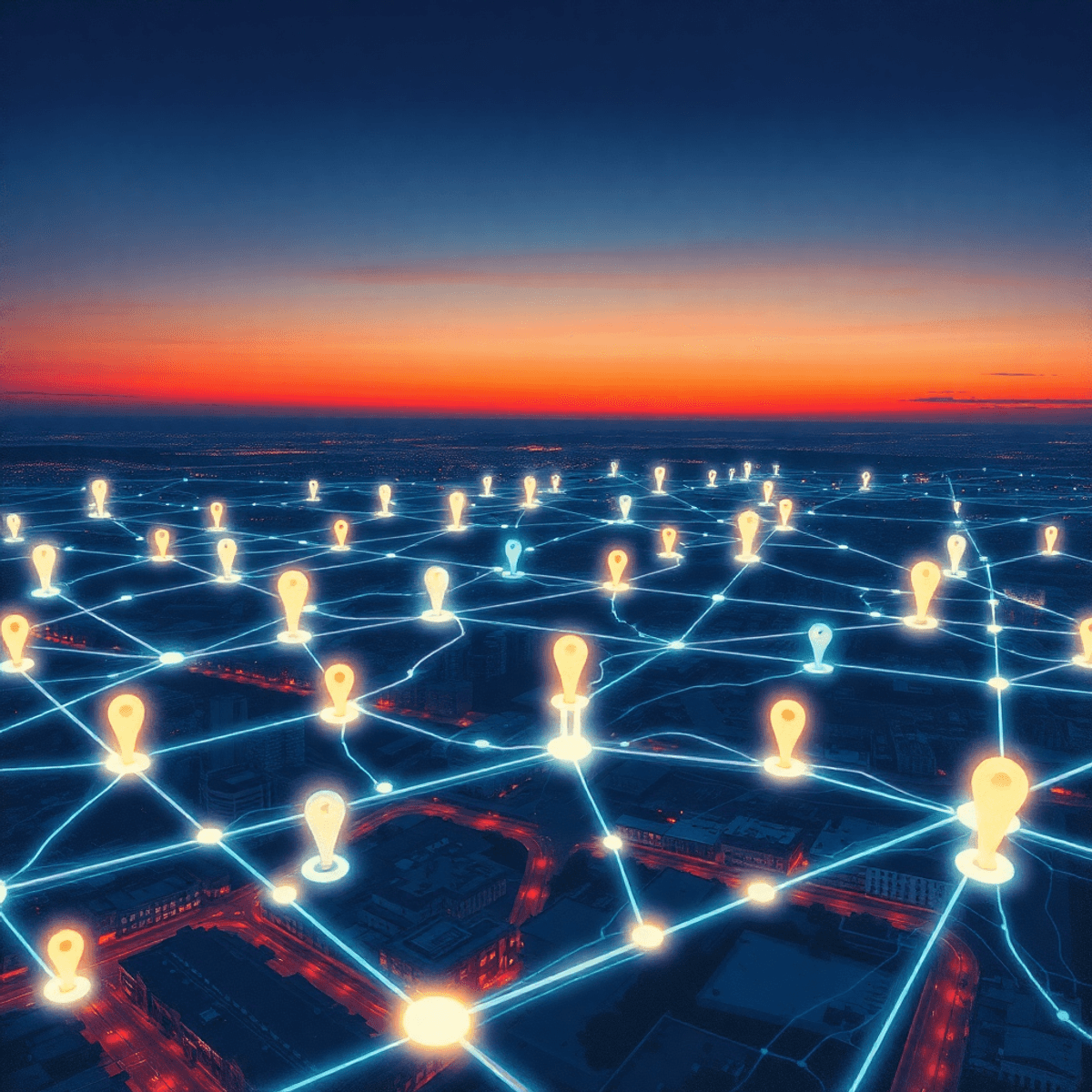
Geofencing uses a mix of GPS, WiFi, and cell towers to set invisible lines around a place on the map. When someone's device, like a phone, goes in or out of this area, it can send a warning or start an action. This way of drawing lines is important for many things. Some use it for ads, and others use it to help keep a space safe.
Recent changes in this area have made geofencing do more than just send alerts when someone enters or leaves a place. Virtual geofencing and digital geofencing now let you watch and control things in smarter ways. These tools work with mobile apps and IoT devices to act fast. The way geofencing has changed shows that there is now more trust in better location data. This is true for both businesses and public safety.
This article shows some unexpected ghost uses of geofencing services that you may not know about. Law enforcement agencies use these services in ways that can get people talking. They use geofencing warrants to gather a lot of location data from phones and devices, but they do not know who is involved at first. This practice affects areas like looking into deadly accidents and fighting human trafficking, sometimes even across countries.
You will learn about how these new uses can challenge ideas about privacy. They also give new tools for crime investigation and for public safety. The struggle between new ideas and doing what is right in these changing geofencing methods is still a very important topic.
In the field of public safety, CCTV technology is now a very important tool. It is used with geofencing to make places feel safer. A night CCTV camera can join with geofencing. It helps watch certain spots when you can't see well, like at night.
When you want to choose the right equipment for these jobs, it is good to know which CCTV camera is best for house. This can really help you get better results. Now, because there are new updates in the field, things like AI object detection in CCTV make it possible to watch things more closely and keep track of what is going on.
Moreover, features like smart search for motion events help people go through video and find the important moments fast.
Understanding Geofencing Technology
Geofencing is used to make borders around certain places by using location-tracking. A few different methods can help geofencing work best. The most important ones used for geofencing are:
1. GPS Geofencing
It uses satellite signals to find where a device is with great exactness. This way is best for outside areas and for tracking things over a long distance.
2. WiFi-Based Geofencing
Uses nearby WiFi networks to find out how close the device is. This gives better accuracy when inside buildings or in places with lots of people and buildings, like cities, where GPS can be weak.
3. Cell Tower Triangulation
It works out where you are by picking up signals from more than one cell tower. While it is not as exact as GPS, it can still give good information in places where there is little or no satellite or WiFi coverage.
There are many geofencing devices and geofencing trackers in the market. Each one is made for a certain use.
1. Geofence GPS Trackers
Portable devices give you real-time locations. They send you alerts if you cross set boundaries. These are popular with people who manage car fleets. Asset tracking services also use them.
2. Wearable Geofence Devices
Used for the safety of people, especially for kids and older people. It can send simple alerts when someone goes in or out of safe areas.
3. Mobile Apps with Integrated Geofencing
Many apps use geofence features with no extra tools needed. They depend on the GPS that is already in your phone and use data from your phone's connection.
Collecting and using geofencing data means always keeping track of where a device is inside certain digital areas. This kind of data can help businesses know more about how people act, make delivery routes better, or keep places safer. People feel privacy is very important, as location info can be private. That is why trusted geofencing services have strong rules on how they use data, and most of them make sure that the data does not show who it is from.
Connecting mobile apps and web platforms with geofencing makes it work better than just using single devices. For example:
A geofencing web application lets administrators draw and set up several geofence zones right on maps. They can make triggers that go off when users move in or out of these areas.
Mobile apps use this to give real-time notifications, start automated tasks, or send location-based content straight to users’ devices.
A geofencing agency usually looks after big projects. They use hardware, software, and tools to give solutions that fit each client. The agency helps with setup, looks after things, and makes sure everything is done right. They also offer different geofencing pricing plans that fit what the client needs.
Knowing how the tools work and what you have to use helps you figure out how good geofencing apps are. You can use these for your business to make things better, for more safety like using them with CCTV security systems, or for new ways in law enforcement and helping people in society.
Moreover, when you use geofencing with advanced security tools like AI night guards or smart wire-free security, it can help to make things even safer. The two can work together well with geofencing to give you a strong security setup. This will not only keep track of where people go but will also watch the area with CCTV cameras.
Knowing how geofencing works can help you use it in many different ways. It is important to keep both privacy and rules in mind when you use this kind of technology.
Common Applications of Geofencing Services
Geofencing apps are now a big part of many businesses. They help users set up digital borders that make some jobs easier and quicker. Many people and companies use geofencing tools to work with location information in different ways.
Business Uses: Targeted Advertising and Competitor Geo-Fencing
Businesses use geo fencing to send special ads based on where people are. For example, a store can send deals to people when they come close to a shopping mall.
Competitor geo-fencing means setting up virtual borders around other stores’ locations. This helps a company see how many people go by, or try to bring in shoppers from other stores by giving them a deal at the right time.
Location-based marketing helps more people notice ads because the ads fit what is around them right then.
Employee Time Tracking with Geofence Time Tracking Apps
Geo fence technology makes it easy to track time for people at work. It logs the time and date by itself when someone comes in or leaves the work zone.
Geofencing time tracking apps help fix mistakes that happen when people do things by hand. They stop others from signing in for you, so the attendance records stay true.
These apps send alerts to managers right away if people don’t come in inside the geo zone at the set hours. This helps to manage the team better.
Bringing these systems together with payroll programs makes pay-day simple. It does this with location data you can trust.
Enhancement of Security Systems Through Geofence Alarms
Security systems with geofence alarms send alerts when a device or item moves out of set areas.
Vehicle security tools like Ghost Lock use geofencing alarms to let the owner know right away if a car leaves its set space.
Property safety gets better with geofence alerts. These alerts help people act fast if someone gets in or does something odd.
Using geofence alarms with “round the clock” monitoring gives more safety without being nosey. For example, portable CCTV cameras can work with these setups to give better watch.
Automation of Smart Home Devices Triggered by Location Boundaries
Smart home automation uses geo fencing to switch devices on or off by tracking when you get close to home.
Lights, thermostats, and security cameras can turn on as you come to your house, making it easier for you and saving energy. The use of AI CCTV cameras is changing how things work in this field.
You can set things your way, so different actions happen depending on if you are coming home or going out, fitting right into your day without a hassle.
With this hands-free way, you don’t have to do things by hand as often. Your space gets smarter and adjusts to where you are.
The growing list of ways to use geofencing shows how this is becoming a big part of daily life. It helps boost business operations and keeps things safe with smart CCTV security cameras: This also makes life easier by letting people use smart home features. The way this works shows why more and more groups choose geofencing solutions.
The Rise of 'Ghost' Applications in Law Enforcement
Law enforcement now uses geofencing warrants. This practice lets agencies find out where groups of people are in a set place and time. They do not have to pick any certain person at first. Police set a digital area and a time. Then, they ask big tech companies like Google for location data from people who were in that area.
Google’s SensorVault database helps by keeping past location data from many devices. When police get a geofencing warrant, they get device IDs for all the mobile devices that were in a set area at a set time. The IDs are anonymous, so they do not show who you are right away. This way, police can find people in the area, but some of them may be innocent.
This big collection of location data is why people often call these investigative ways "ghost" uses of geofencing services. The word points out the quiet and wide watching of people who have not done anything wrong. When they get the first set of anonymous data, the authorities might ask for more warrants or take legal steps. They do this to find certain devices that belong to people they are interested in.
Key features of these ghost applications include:
The gathering of place records from thousands, or sometimes tens of thousands, of devices at the same time
Use for case work where there is no clear suspect, like hit-and-run or property crime
Dependence on help from big tech companies that have a lot of location data from users
Anonymous at the start, then focus on suspects with extra steps that use the law
The use of geofencing warrants brings up hard talks about privacy and how far lawful watching should go. Many people say that following everyone in the area can go against old ideas of probable cause. It might also lead to innocent people getting caught up in criminal searches.
This new law enforcement tool is a big step in how digital location data works with public safety. It gives new options and also raises questions about how to use it the right way and who will watch over its use.
However, while these tools are strong and helpful for law enforcement, they also show why security steps like CCTV intrusion detection and prevention are so important.
Using these steps can make home security better and keep you safe from unwanted watching or break-ins. If you know the functionality of CCTV, you and your family can get more from these systems and feel safe at home. Now, with more ghost applications found in geofencing services, there is a bigger need to pay attention to these things.
Legal and Ethical Challenges Surrounding Geofencing Warrants
Geofencing warrants bring up big questions about Fourth Amendment rights and privacy concerns. With these warrants, law enforcement may get location data from many devices in a set area. They can do this even when the people there are not suspected of doing anything wrong. This practice means police can collect info from thousands of innocent people at one time. Many people feel this broad way of watching everyone goes against their privacy.
Privacy Implications
Mass Data Collection: A geofencing warrant is not like a regular warrant. Regular warrants go after certain people, but these scoop up data from all phones in one spot. They catch the movements and habits of many people who just happen to be nearby.
Innocent Individuals at Risk: A person’s location history can show where they live, work, and what they do every day. It also can show who they talk to. This means people who did not break any law end up getting looked at for no real reason.
Data Security Concerns: A big risk comes from how this location data gets kept and used. The way people store and use the data could let people take it or leak it by accident. This may hurt a person’s right to keep their life private.
Legal Debates and Court Challenges
Courts in the United States do not all agree on whether geofencing warrants are allowed under the law. The main things people still talk about are:
Probable Cause Requirement: Old rules from the Fourth Amendment say that police need to have a good reason tied to one person or place. Geofencing warrants go against this idea. They focus on unknown groups of people just because those people were in a certain area.
Expectation of Privacy: Legal experts ask if people still have a fair or real expectation of privacy over their past location data that companies like Google keep for them.
Precedent Uncertainty: Past court cases about cell tower records and tracking devices help a little. They do not fully cover how big or new geofencing is.
Some judges now want to see tougher rules before these warrants are given out. Other judges still allow them with the rules that are already in place. Because there are no clear rules in the law, police may keep using geofencing warrants. This is happening even though people still worry about the rules fitting with the Constitution.
Balancing Public Safety and Individual Rights
Law enforcement says geofencing helps them solve crimes, even when they don't have direct leads on a suspect. But, people who care about privacy say that we should not give up our freedoms just to make police work easier. The main discussion is about how to balance good police work with keeping people’s rights safe as our digital info is found everywhere.
The changing rules around geofencing mean that people need to look at it carefully. There may need to be new laws or court decisions to set clear rules for what police can do and what is too much watching of people. This issue is a lot like what happened with the alarming rise of fake CCTV, where people use cameras in a wrong way. These things show that strong rules are needed so people’s rights are safe.
Impact on Crime Investigation and Public Safety: A Closer Look at Car Accidents
Geofencing helps make crime investigation and public safety better, mainly for car accidents. The use of tools that track a car’s location in set areas helps the police understand what happened during things like a blown tire or a broken truck tire. This can give them important details about the event.
How geofence data assists in accident investigation:
Accident connection: Geofence records can show if a vehicle was at the spot where an accident happened at the right time. This helps a lot when there are many cars or when people’s stories do not match.
Identifying vehicle movement: Location tracking shows the exact way and speed a vehicle took before, while, and after an accident. This helps investigators see things like quick stops or swerves that may point to a problem with the car or an error by the driver.
Detecting car parts failure: When a car has a broken tire or if a tire blows out, geofencing data and sensor readings can show if the car acted in a way that points to a tire problem. This helps car accident lawyers and insurance firms show who is at fault.
Corroborating physical evidence: Investigators use geofencing data with physical clues like skid marks or parts from broken truck tires to reconstruct the accident scene accurately.
Geofence tracking is used for more than just recording where something is. It lets systems send real-time alerts to the right people. This happens right away if a vehicle leaves a safe area without warning. Often, this can show times when there is a tire blowout or other emergency that needs quick help.
Example: A semi-truck suffers a broken truck tire on a highway. Geofencing services detect erratic movements and rapid deceleration. Emergency responders receive instant notification, enabling quicker assistance. The collected data supports subsequent investigations by clarifying event timelines and responsibilities.
Using geofencing data helps car accident lawyers build stronger cases. It gives more details that were hard to get before. This extra information helps when there is a tire blowout or some problem with the car parts. It can make the case better for people who want a fair result.
Geofencing helps a lot with watching over cars and how they move. The way it works changes how groups in charge of public safety deal with problems on the road. This can help them act early and lower the risk of danger. When there is a crash or some kind of problem, geofencing gives clear information. The tool is now one of the best choices for keeping roads safe today.
Advances in self-driving car systems, like the ones Mercedes-Benz is creating with their Drive Pilot, could make geofencing work better when it comes to accidents. This is because these systems can give better data on how the car moves and what is happening at the time. This can help stop accidents and help people look into what caused them.
Commercial Aspects: Cost and Service Providers in Geofencing Services
Knowing the geo fencing cost is important if you want to add geofencing to your business or use it for safety. The price can be very different based on the features, how big the project is, and which provider you pick. There are several geofencing service providers out there, and they have different price plans. Each one is made for a special use, like marketing or security for cars.
Common Pricing Models
Subscription-Based: Many companies ask for a fee every month or each year. The price depends on how many geofences, active devices, or user accounts you have. This is good for businesses that need location services all the time.
Pay-As-You-Go: Here, you pay for what you use. They count things like geofence triggers or API calls. This plan works well for short-term or on-and-off campaigns that need more freedom.
One-Time Licensing: Some platforms let you pay one time for a license to use the software forever. They may also have extra support fees if you want help. This is often seen with hardware for tracking, like the Ghost Lock vehicle tracking system.
Factors Influencing Cost
Number of Geofences: If you add more digital boundaries, the cost will go up. This is because more data needs to be handled and watched.
Device Volume: If you track more devices at once, you will spend more money. This is due to the extra internet and space needed.
Advanced Features: Features like sending text alerts, stopping a car from far away, checking things in real time, and having a backup power source can make the price much higher.
Data Retention and Reporting: Services that let you see deep reports and keep your info for a long time are often more expensive.
Notable Geofencing Service Providers
Google Maps Platform: It gives geofencing APIs and uses pay-as-you-go pricing. This is based on the number of requests you make. It is good for developers who want to add location features into their apps.
Ghost Lock: This is a special tool that helps stop car theft. It uses 4G LTE and smart geofence alarms. The price has a hardware cost and a subscription that you need to pay to use the system.
Radar.io: This tool gives you location features. The pricing gives you many plan options made for the needs of people in marketing, logistics, and security fields.
PlotProjects: This tool is great for putting geofencing and push notifications together. The price changes based on how many geofences you need and on the number of messages you use.
There are many other companies in the market. They offer different help that match business goals or security needs. You should look closely at the kind of help you get compared to the cost of geofencing. This way, you can pick the right provider and not spend too much.
Looking at these business options shows how geofencing has changed over time. It's not just used in marketing. Now, you can find geofencing in many places, like police work and strong car security systems. You can read more about this in the part called Surprising Ghost Applications of Geofencing Services You Should Not Know.
Also, it is good to know that some new uses of geofencing are now being used in other areas too. A good example is when you are exploring different types of thermal cameras. These cameras, used in security, can be better with geofencing, which helps with watching over places and keeping an eye on things.
Advanced Features in Modern Geofence Technology You Should Know About
Geofencing has changed a lot in recent years. It is now more than just simply tracking where someone or something is, or getting alert when they cross a certain line. A big step forward is the integration of SMS geofencing. This lets you get real-time notifications sent straight to your phone when the person or thing being tracked passes the set area.
What Is SMS Geofencing?
SMS geofencing uses regular text messaging along with geofence triggers. Unlike app alerts or emails, it sends an SMS right away to chosen phone numbers as soon as the geofence is crossed. This can be very useful in cases where you must know what is happening at once. It also helps when internet is not good or is missing.
Key Benefits of SMS Alerts in Geofencing
Immediate Communication: Text messages usually do not need the internet. They reach people fast, even when there is a weak signal.
Wider Reach: Not everyone uses or wants to get new apps on their phone. SMS alerts work on almost all mobile phones, so they can go out to a lot of people.
Customizable Alerts: People can change the messages they get based on where the fences are, the time, or special things happening—like when you go in, go out, or spend too much time in a place.
Enhanced Security Applications: In car tracking tools like Ghost Lock, SMS alerts tell car owners right away if their car moves out from where it is allowed to be. This helps them act faster. These tools also help people feel safe and are being added into more things we use now. An example is how experience unmatched security with the integration of advanced technologies like SMS geofencing helps people feel safer and look after what they own.
Business Operations: Companies that move things or run many vehicles use SMS geofencing to keep track of shipments and send update messages to customers. This works without asking anyone to download a new app.
Technical Aspects Behind SMS Geofencing
The integration works by linking the geofence trigger system with an SMS gateway. When a device goes past a set boundary, the system makes an API call to the gateway. The gateway sends out the SMS message after that. This setup needs to bring together GPS trackers, cellular networks, and cloud-based alert platforms.
SMS geofencing also lets you send messages to more than one person at the same time. This helps businesses or security teams get updates together. Some newer platforms add two-way texting, so you can send and get messages, give commands, or ask for updates from far away.
This change where SMS alerts are used shows how geofencing keeps up with what people need in real life. The technology helps people act fast in keeping safe, looking after things they own, watching over workers, and talking to customers. You do not need to only use smartphone apps or have internet, which makes it more useful for everyone.
Broader Social Implications Including Human Trafficking Monitoring Using Geolocation Data from GPS Trackers with Geofence Alarms
Human trafficking detection with geo fencing is a new step in the fight against one of the world’s most common crimes. When agencies and groups use GPS trackers with geofence alarms, they get tools to track people moving across borders and inside cities. This gives them new ways to find travel patterns that match up with how human trafficking works.
Potential Benefits:
Real-time alerts: A gps tracker with geofence alarm can let authorities know right away when a watched device goes outside set areas. This helps people act fast.
Cross-border monitoring: Intercontinental human traffic routes often use tricky transit paths. Geofencing makes it possible to keep track as people move across several borders.
Data-driven investigations: Having a record of where someone has been helps build patterns of movement. It helps law enforcement see trafficking networks instead of just using eyewitness accounts or what victims say.
Discreet surveillance: Unlike old ways of watching, which need someone to be there in person, geo fencing lets people keep an eye on things from far away. This cuts the risk for both investigators and victims. This matches the benefits of integrating perimeter security which helps make places safer.
Challenges and Considerations:
Privacy concerns: Tracking people, even if they are just thought to be involved, brings up big ethical questions. There are worries about consent and how the data may be used in the wrong way.
False positives: Movement by itself may not always show that something like trafficking is going on. We need to look at things closely to tell the difference between innocent travel and a crime.
Technological limitations: GPS can be off at times because of things around it. A loss of signal or someone changing the device can make it not work well.
Legal frameworks: Watching people across different regions means we need laws to match up and countries to work together. This is so any proof we get can be used and people's rights stay protected.
Tracking human trafficking through geolocation is not the only way to fight this problem. It is one part of a bigger plan to stop human trafficking for all of us. Using GPS trackers with geofence alarms, working together by sharing what we know, helping victims, and having strong laws all help us in the fight against human trafficking across countries. Finding the right way to use new tools, while keeping people's rights safe, is important as we work to do more with these ideas.
Future Outlook: Has the Geofencing Protocol Taken a Massive Step Forward?
The future of geofencing technology is shaped by new ideas, real-world uses, and also talks about what is right or wrong. Newer protocols have helped geofencing grow. It is not just about location triggers now. These advanced systems help law enforcement with investigations. They make car security better. They may even be used to stop human trafficking.
Key advancements include:
Better detail and easier connection: These new geofencing setups use the GPS, WiFi, and cell towers at the same time. This gives much better borders that you can trust. It helps make sure the right things happen only when someone enters or leaves a set area.
Get alerts right away: When text or app alerts are used, you get messages fast if an area is crossed or if something odd happens. This works well for safety, taking care of things people own, and quick help in an emergency.
Do more with ‘ghost’ apps: Police now use geofencing warrants. With these, they ask for location information from lots of people at once. They don’t need to start by thinking a certain person did it. By looking at private device data in a set place and time, they can find out who was there.
These changes show there is progress. But, they also bring up some ethical issues that we need to look at:
Mass surveillance concerns: Geofencing warrants gather data on many innocent people who are just in the area that gets targeted. The balance between public safety and people’s privacy is still up for debate.
Legal ambiguities: Courts are still trying to figure out if geofencing warrants fit with what the constitution says about probable cause and the Fourth Amendment.
Risks of using it wrong: If there is no clear watch over the system, geofencing tools can make the police go too far or treat people unfairly. People might say they use it to keep things safe or stop crime, but it could get used for other reasons.
The way things are going, tools are getting stronger. These tools mix everyday ease with help for the police. To really get what is happening with "Surprising Ghost Applications of Geofencing Services You Should Not Know," people who make apps, those who make rules, and people like you and me all need to be careful and watch what is going on.
New ideas show that soon, geofencing might do more than it does right now. It could help stop crime that goes across borders. It may also help with quick, automatic answers when things go wrong. For this to work, we have to make good systems. These systems need to respect people's rights. At the same time, they should find the best ways to use new technology. Only then can we all get good results from these changes.
Careful steps in this changing field will decide if geofencing now moves ahead. It is not just about what it can do but also about using it responsibly. This matters as we see geofencing play a key part in making security better. This might change how we see and use security plans.
Conclusion
Surprising Ghost Applications of Geofencing Services You Should Not Know shows us how strong and risky this tool can be. Geofencing can make fake lines around an area. This has many good points, like these:
Making the security systems better
Helping law enforcement get to solve crimes
Creating new ways for commercial solutions like vehicle anti-theft systems
We need to think about the ethical and privacy side of this, too. When law enforcement uses geofencing warrants, it can help solve crimes. But, it may also cause worry about mass tracking and the rights of people who have done nothing wrong. These wide searches can affect many innocent people. The laws are not fully set for these new things yet, so there are still many questions that need answers.
Key points to consider for responsible adoption:
Transparency: Clear rules on how geofencing data is taken, kept, and used.
Accountability: Strict checks on how the police use geofencing warrants.
Privacy protections: Steps to cut down on getting into the lives of people not involved.
Technological safeguards: Adding things that let people choose to not take part or hide their info when they can.
As a user or someone who has a stake in this, you should ask for fair solutions. These solutions need to use what geofencing can do, without breaking basic rights. To go ahead, people who work with technology, those who make laws, and community groups all need to work together. This can help make sure geofencing rules are made in a good and right way.
FAQs (Frequently Asked Questions)
What is geofencing technology and how does it work?
Geofencing uses GPS, WiFi, or signals from cell towers to set up invisible boundaries. When a device goes in or out of these areas, it can make something happen. A geofence GPS tracker gathers location data. This data works together with mobile apps and web services.
What are common applications of geofencing services in business and security?
Common uses for geofencing are things like targeted ads, keeping track of where someone from work is by using geo fencing time tracking apps, making security systems better with geofence alarms, and turning smart home devices on or off when you enter or leave certain areas.
What are 'ghost' applications of geofencing in law enforcement?
‘Ghost’ applications mean that police and other agencies use geofencing warrants to follow the location of many people. They do this without first suspecting anyone, but by asking for hidden location data from tech companies. A company like Google SensorVault can give this kind of information. Agencies use the data to help with their work.
What legal and ethical challenges surround the use of geofencing warrants?
Geofencing warrants bring up some worries about privacy. They can lead to collecting a lot of location data from people who did nothing wrong. There may be problems with the Fourth Amendment because of this. People still talk in court about if these ways of watching are allowed and fair.
How is geofencing technology used in investigating car accidents?
Geofence data helps with accident investigations by giving clear location details. This can be useful for cases that have things like blow tires or broken truck tires. It helps car accident lawyers and those who look into these cases to know the timeline and link accidents better.
Can geofencing technology help combat human trafficking?
Yes, using GPS trackers with geofence alarms can help to watch for and find human trafficking that happens across borders. But, there are still some issues to deal with. These issues include privacy, working together between different places, and making sure the use of this location data is right and fair.
Comments
Post a Comment